
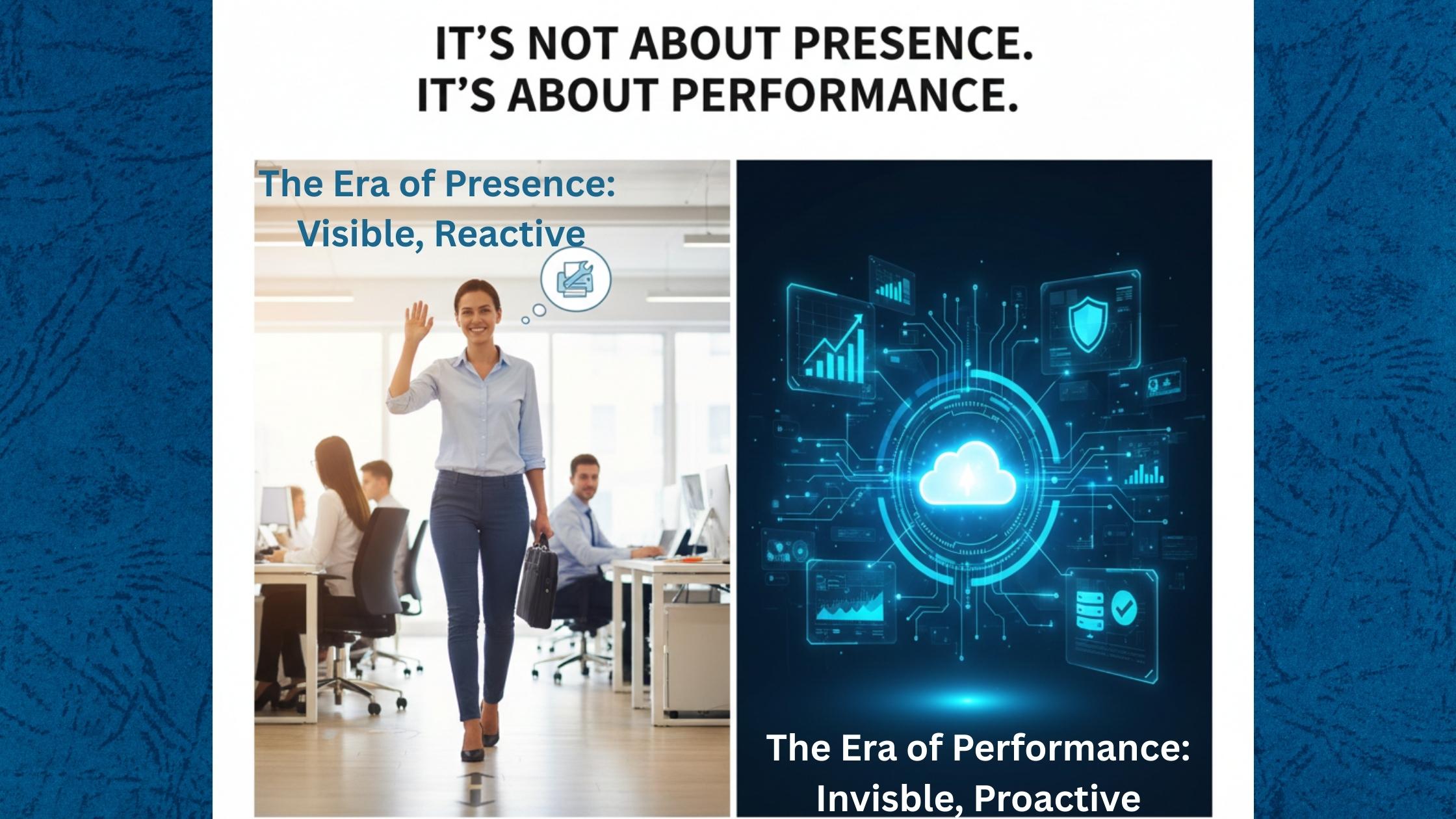

Presence ≠ Performance: Why Onsite IT Still Feels Essential (and Why It No Longer Is)
Across manufacturing, professional services, nonprofits, and everything in between, one objection shows up early in almost every IT conversation:
“We need someone on site. Remote IT will not cut it.”
At first glance, it feels reasonable. For years, IT required physical touch. Printers jammed. Servers failed. Someone had to walk the floor.
But today, with most workloads running in the cloud and an estimated 80–90% of day-to-day IT tasks handled remotely, the belief that “onsite = better” is no longer rooted in technology.
It is rooted in psychology.
This quibble is why so many organizations cling to on-site IT even when their environment no longer demands it.
And it’s why the most resilient SMBs are shifting to remote-first, outcome-driven operating models, achieving faster resolution times, a stronger security posture, and fewer single points of failure.
1. The Myth: Presence = Performance
For decades, IT was something leaders could see.
Your IT person walked the floor, plugged in cables, fixed printers, and jumped on issues immediately. That visibility created the comforting impression of:
- responsiveness
- accountability
- productivity
- hands on the wheel
But proximity never guaranteed performance. It simply made the work visible.
In modern environments, performance comes from:
- continuous monitoring
- automated patching and deployment
- MFA and identity-based access
- standardized device provisioning
- fast, multichannel user support
Many SMBs report that once they adopt remote-first monitoring and automation, issues are often resolved before employees even notice. Telemetry replaces desk-side presence and does so continuously, not just occasionally.
For many leaders, the challenge is not capability.
It is trusting a model they cannot physically see.
In our work with Canadian SMBs, we see this pattern often. Teams understand the advantages of remote-first IT, but trusting a model that is not physically observable takes time and evidence. See: “Do You Need In-House IT or an MSP?”
2. Why Onsite Became a Security Blanket
When someone says, “We need IT onsite,” they rarely mean they need physical troubleshooting every day.
They are expressing deeper concerns:
- Will our people get help quickly?
- Will IT understand how we work?
- Will remote support feel distant?
- Are we giving up control?
These concerns often surface when teams begin rethinking what adequate IT support should look like.
Many discover that onsite habits persist long after the environment no longer requires them, usually because the underlying processes, visibility, or communication models have not kept pace with the rest of their operations.
As one Finance Director put it, “Many NFP organizations do not have the financial resources to keep a qualified IT person on staff. Third Octet provides access to a knowledgeable team at a fraction of the cost.”
We see this same pattern across all types of SMBs. Leaders are realizing they can achieve higher-quality support without the burden or cost of maintaining a dedicated onsite presence.
A mature MSP creates confidence through:
- clear SLAs
- predictable response times
- transparent ticketing and reporting
- proactive communication
- consistent standards across devices and users
On-site feels like support.
Remote proves it.
3. The Few Situations Where Onsite Still Matters
Physical work is not gone. It is simply more specialized.
On-site support is still helpful for:
- manufacturing or distribution equipment
- POS terminals and peripherals
- lab or tactile workflows
- device imaging and provisioning
- persistent local network or cabling issues
Even here, onsite needs tend to be:
- event-based
- predictable
- tied to specialized equipment rather than general IT
Most organizations that audit their tickets discover that these cases represent a small fraction of total support volume and do not require a full-time onsite presence.
This pattern reinforces a remote-first model with scheduled onsite visits when needed.
4. The Better Question: What Outcomes Do You Want From IT?
Instead of asking,
“Do we need someone onsite?”
The higher-value question is:
“What outcomes do we want, and what model delivers them most reliably?”
Most SMBs want:
- less downtime
- faster resolution
- stronger cybersecurity
- smoother onboarding and offboarding
- predictable support costs
- reduced operational risk
- a partner who communicates clearly
A body in the building does not guarantee any of these outcomes.
A remote-first model, supported by automation and standardized processes, often delivers all of them and eliminates common bottlenecks caused by single-person dependency.
5. Control vs. Confidence
Here is the emotional core.
On-site feels like control.
Remote work requires confidence.
Confidence comes from:
- real-time visibility into systems
- defined service levels
- strong identity and access controls
- transparent workflows
- proactive communication
If an organization has never experienced a mature remote-first model, onsite feels safer by default, even when it is objectively slower, less scalable, and more vulnerable to outages or turnover.
A Simple Next Step: Audit Your Onsite Dependency
If onsite support still feels essential, you are not alone. Many SMBs think the same way until they analyze their actual task mix.
Most discover that:
- roughly 80–90% percent of tasks are fully remote
- 10–20% require onsite, but in predictable patterns
- 0% require a dedicated full-time onsite technician
Once the work is reframed this way, the path becomes clearer.
The goal is not presence.
The goal is performance.
An onsite-first mindset is rooted in history.
A remote-first approach is rooted in what actually works today.
If you are curious where your organization falls on that spectrum, start by identifying which tasks truly require physical touch and which no longer do. That single exercise often reveals opportunities to improve reliability, security, and predictability across the business.
The shift is not just possible.
It is often better, more secure, and far more scalable.
And it frees your team to focus on performance, not presence.
Reach out if you’d like our team to walk you through a simple onsite-versus-remote readiness check.


0 Comments